Licorice in TSW: Why This Herb Is Often Misunderstood
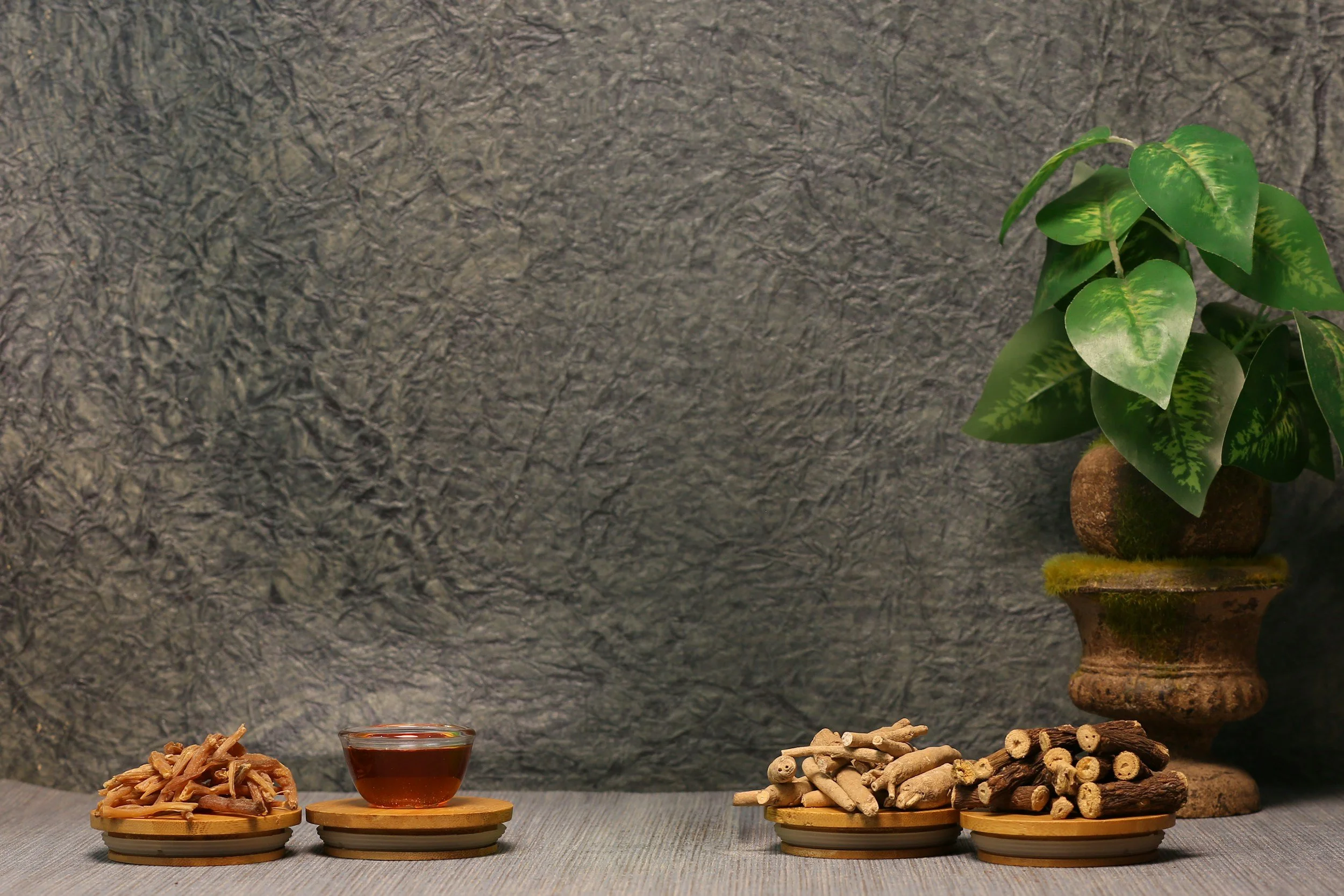
Licorice and other herbs used medicinally
Licorice is one of the herbs that can raise questions within the topical steroid withdrawal community.
I can understand why. When someone has had a difficult experience with topical corticosteroids, they are often more thoughtful about anything described as “steroid-like”, “cortisol-supportive” or “adrenal”. Those words can feel uncomfortably close to the treatments they are trying to make sense of.
Licorice does interact with cortisol metabolism, so it is understandable that questions come up around its use in TSW. The difficulty is that this is often reduced to the phrase “steroid-like”, without explaining what that actually means.
Licorice is not a corticosteroid. It does not act in the same way as a topical steroid cream, and in herbal medicine we are not using licorice as a natural version of hydrocortisone, betamethasone or any other corticosteroid medication.
That changes how we understand the herb. Licorice may influence how the body handles its own cortisol, but this is very different from applying steroid medication to the skin.
Why Licorice Gets Compared to Steroids
Licorice root, Glycyrrhiza glabra, contains a constituent called glycyrrhizin. This is the part of licorice most often discussed in relation to cortisol.
Cortisol is one of the body’s own steroid hormones. It is produced by the adrenal glands and helps regulate inflammation, blood pressure, immune signalling, blood sugar and the stress response.
Glycyrrhizin can slow the conversion of active cortisol into its inactive form, cortisone, in certain tissues. This means the body’s own cortisol may remain active for longer.
This is where the “steroid-like” description comes from. It is referring to an effect on cortisol metabolism, not to licorice being a corticosteroid medication.
Topical corticosteroids are pharmaceutical medications designed to bind to glucocorticoid receptors and reduce inflammatory signalling in the skin. They have a direct local effect on the tissues where they are applied.
Licorice is working in a different way. It is not delivering corticosteroid medication into the skin, and it is not acting with the same potency, mechanism or clinical effect as a prescribed topical steroid.
In practice, this means licorice may influence how the body handles its own cortisol, while still being very different from applying a corticosteroid medication to the skin.
How Licorice Is Used in Herbal Medicine
In herbal medicine, licorice is rarely used for one single reason.
It is a broad, traditional herb with several useful actions. It may be considered for its soothing, anti-inflammatory, adrenal-supportive, immune-modulating and mucous membrane-supportive properties.
It is also what herbalists often call a harmonising herb.
This means it can help bring a formula together. It may soften the edges of stronger herbs, improve the taste of a blend, support tolerance and make the overall prescription feel more balanced.
This is an important part of how licorice is often used. It may be included in small amounts within a wider formula, rather than sitting as the main herb. In that context, it is supporting the direction of the blend rather than acting as a standalone intervention.
That is very different from taking high-dose licorice extract, using concentrated glycyrrhizin products, or drinking strong licorice tea several times a day without guidance.
Dose, form, duration and context all matter.
Licorice, Cortisol and the “Natural Steroid” Question
Licorice is sometimes described as a “natural steroid”, although I think this phrase tends to create more confusion than clarity.
What people usually mean is that licorice can influence cortisol metabolism. That is a specific action, and it is not the same as saying licorice behaves like a corticosteroid medication.
There are many herbs and nutrients that influence inflammatory pathways, support adrenal function or interact with the stress response. That does not make them equivalent to topical corticosteroids.
This is particularly relevant in TSW, where people are often trying to make sense of a lot of overlapping information: skin inflammation, vasodilation, barrier repair, microbial balance, itch, burning, sleep disruption and nervous system sensitivity.
Broad phrases such as “natural steroid” can easily become misleading because they do not explain the mechanism, the dose, the route of use or the clinical intention behind the herb.
In herbal medicine, licorice is not used to replace topical steroid medication. It is usually used as part of a wider formula, where it may support inflammatory balance, stress physiology, mucous membranes, digestion and the overall tolerance of the blend.
This gives us a more accurate way to place licorice within herbal medicine, without overstating what it is doing.
Where Licorice May Fit in TSW Support
Topical steroid withdrawal is rarely just a skin issue.
The skin is the visible part, while the process often involves the nervous system, sleep, inflammation, histamine tolerance, gut function, microbial balance, lymphatic flow, stress physiology and the person’s overall resilience.
This is why herbal support needs to be individualised.
In some cases, licorice may be useful when someone’s presentation suggests they need more support around inflammatory tone, stress resilience, mucous membrane irritation, digestive comfort or formula tolerance.
It may be blended alongside herbs such as nettle, oat straw, marshmallow root, calendula, chamomile, skullcap, rehmannia, gotu kola or other herbs chosen according to the person’s presentation.
Licorice would not be the whole plan, and it would not be suitable for every person.
The decision to use it depends on the person’s health history, blood pressure, medication use, symptoms, constitution and current stage of TSW.
Safety Considerations
Licorice is a medicinal herb, so I would always want to understand the person’s wider health picture before using it.
The main cautions relate to its glycyrrhizin content. In higher amounts, or with long-term use, licorice can contribute to fluid retention, raised blood pressure, low potassium, headaches or changes in heart rhythm in susceptible people.
I would be cautious with whole licorice in people with:
high blood pressure
kidney disease
low potassium
heart rhythm issues
significant fluid retention
pregnancy, unless prescribed by a qualified practitioner
use of diuretics, digoxin, corticosteroids or blood pressure medication
complex medication regimes where interactions need checking
This does not mean licorice is unsafe for everyone. It means it needs to be used with clinical context.
A small amount of licorice in a professionally formulated herbal blend is very different from self-prescribing large amounts or taking concentrated products without monitoring.
What About DGL Licorice?
You may also come across DGL, which stands for deglycyrrhizinated licorice.
This is licorice with most of the glycyrrhizin removed. It is commonly used for digestive support, particularly where the stomach or upper digestive tract feels irritated.
Because most of the glycyrrhizin has been removed, DGL is much less likely to have the same blood pressure or potassium-related effects as whole licorice.
DGL and whole licorice are not interchangeable.
If I choose DGL, I am usually thinking about local digestive support.
If I choose whole licorice, I am usually thinking about the broader actions of the herb, including its role in cortisol metabolism, inflammation and formula harmony. The form chosen depends on the clinical aim.
How I Think About Licorice in Practice
When I am considering licorice in a TSW context, I am not thinking about it as a steroid substitute. I am thinking about whether it has a useful role within the wider pattern the person is presenting with.
That might include inflammation, stress physiology, digestive irritation, mucous membrane support, formula tolerance, or the need for a herb that helps bring the blend together.
This is where clinical context matters. The same herb can be very appropriate in one formula and unnecessary in another. It depends on the person, their symptoms, their health history, their medication picture and the reason the herb is being chosen.
Licorice is a good example of why herbal medicine cannot always be reduced to a single action or label. Describing it only as “steroid-like” misses the broader picture of how it is used, while describing it as gentle or natural without any cautions would also be too simplistic.
In practice, I see licorice as a useful supportive herb when it is chosen carefully, dosed appropriately and used for a clear reason. It is not a herb I would automatically include in every TSW formula, and it is not a herb I would automatically avoid because of its relationship with cortisol metabolism.
As with all herbal medicine, the more useful question is whether this herb is appropriate for this person, in this form, at this stage, and for this reason.
I hope this helps clarify why licorice is sometimes discussed in relation to cortisol, and why that does not make it the same as using a topical corticosteroid. As always, the context, dose and intention behind the herb matter.