What do I mean by a root cause approach to eczema?
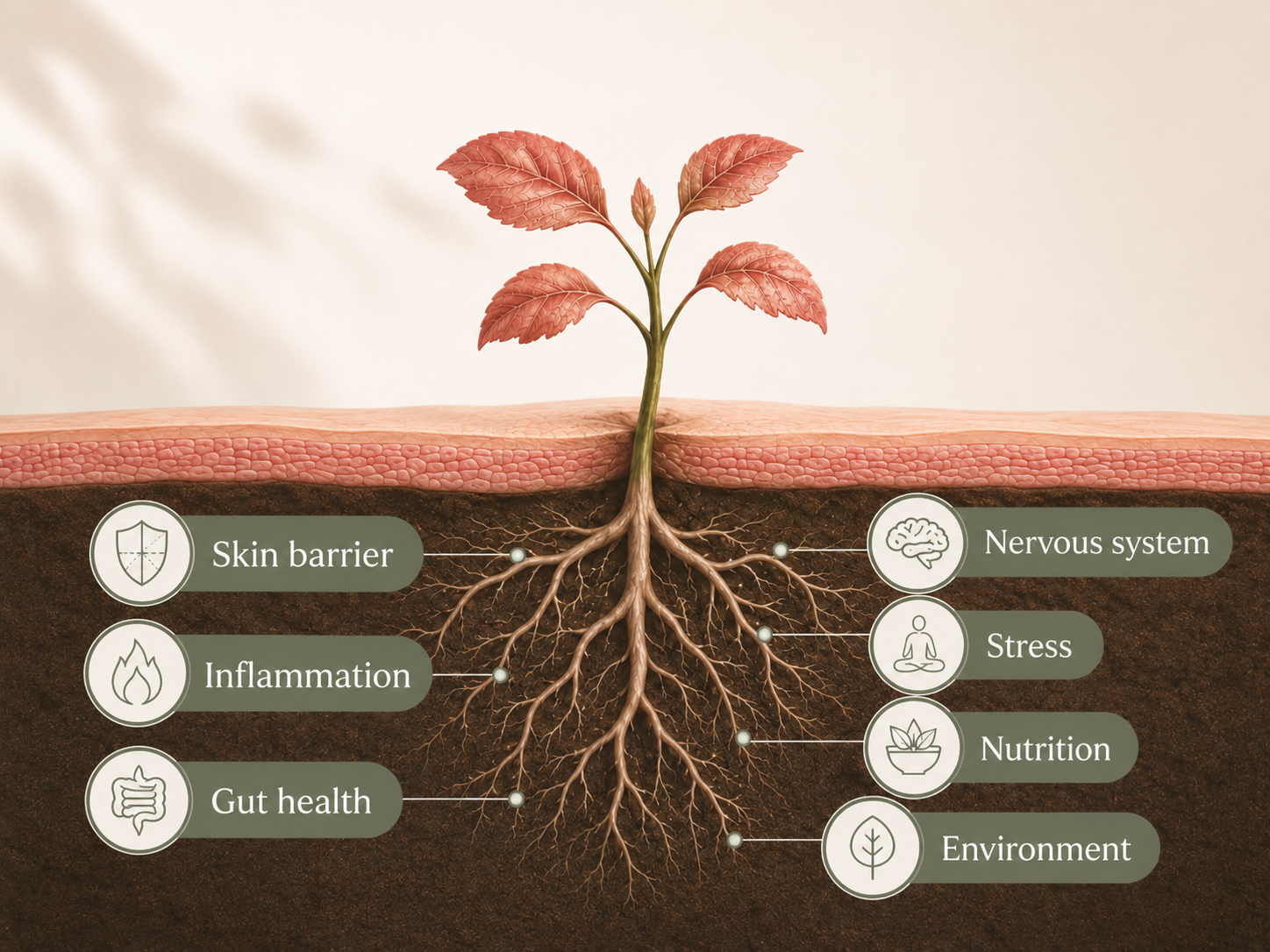
Root causes of skin conditions - infographic of a seedling and a root system
Many clients come to clinic because they are looking for a “root cause approach” to eczema.
It is a phrase that is used a lot in natural health, but it can easily be misunderstood. It can sound as though there must be one hidden trigger, one missing supplement, one food to remove, or one test result that will explain everything.
In reality, eczema is rarely that simple.
From a naturopathic perspective, a root cause approach to eczema is not about finding one hidden trigger. It is about understanding the pattern behind the skin.
It means asking why the skin is inflamed, why the barrier is struggling, why the immune system may be over-reactive, and why the body is finding it difficult to settle and repair.
Eczema is not viewed as just a skin problem. The skin is where the symptoms are showing, but the wider picture may involve digestion, immune reactivity, allergy patterns, nutrient status, microbial balance, stress physiology, sleep, hormones, environmental exposures and the skin barrier itself.
Eczema is not just “dry skin”
Eczema is often described as dry, itchy or inflamed skin, but underneath that visible picture there is usually much more going on.
The skin barrier may be fragile, meaning it loses moisture more easily and allows irritants or allergens to enter more readily. The immune system may be more reactive, producing inflammation in response to foods, microbes, environmental allergens, stress, heat, fabrics, skincare products or infections.
For some people, eczema is strongly linked with allergy. For others, it is more connected with gut health, histamine, stress, poor sleep, recurrent infections, nutrient depletion or hormonal change. In many cases, there is a combination.
This is why two people can both have eczema, but need very different support.
One child may have eczema that flares after viral infections, poor sleep and changes in routine. Another may have a stronger allergy picture, with dust mite, pollen or food reactions keeping the immune system on alert. In adults, I often see a more layered picture, where long-term inflammation, stress, hormones, topical medication history, gut symptoms and a fragile skin barrier all overlap.
The diagnosis may be the same, but the story behind each person is different.
A root cause approach does not mean there is one thing you have missed
A root cause approach can sometimes be misunderstood as though there must be one hidden trigger behind eczema, or one lifestyle factor that explains why the skin is struggling.
In practice, it is much more nuanced than that.
Eczema often has a strong genetic, barrier and immune component, and many people have been managing their skin carefully for years before they seek naturopathic support. The purpose of looking more deeply is not to suggest that you’ve missed something, but to understand what the skin is responding to, and where the body may need more support.
This might include the skin barrier, immune reactivity, allergy patterns, digestion, nutrient status, stress physiology, sleep, hormones or environmental exposures. The aim is to build a clearer picture, so that support can be more individual, more targeted and more manageable.
Looking for patterns, not chasing every trigger
In clinic, I am always looking for patterns.
This includes when the eczema started, what was happening around that time, what makes it better or worse, how the skin behaves through the day, whether there are signs of allergy, whether digestion is involved, how sleep is affected, and how the nervous system is coping.
For children, I will often ask about pregnancy, birth, feeding history, antibiotics, infections, family history, food reactions, weaning, sleep and environmental exposures.
For adults, I may also explore hormones, stress, digestion, medication history, immune patterns, skincare use, topical steroid history, occupational exposures and flare cycles.
This wider case history helps build a clearer picture of the terrain the eczema is occurring in.
The aim is not to investigate everything at once. It is to identify the most relevant drivers for that person, so the plan feels focused, manageable and appropriate.
The areas I most often consider
There are several areas I commonly come back to when supporting eczema. Not every area will be relevant for every person, and this is where individual assessment matters.
The skin barrier
A weakened skin barrier is often part of the eczema picture. When the barrier is compromised, the skin loses moisture more easily and becomes more vulnerable to irritants, allergens and microbes.
Support may involve the right topical care, reducing unnecessary irritants, improving essential fatty acid intake, supporting minerals and nutrients involved in repair, and helping the skin tolerate moisturisers or barrier creams where appropriate.
For some people, especially those with very inflamed or reactive skin, topical support needs to be introduced carefully and gradually.
Immune reactivity and allergy
Eczema often sits within an atopic pattern, alongside food allergy, hay fever, asthma or environmental allergies. For some clients, allergy testing or referral to an allergy specialist may be appropriate, particularly when reactions are immediate, severe or unclear.
A naturopathic approach does not assume that every eczema case is food-driven. It looks at whether food, pollen, dust mite, animals, mould, histamine, infection or other immune triggers are genuinely part of the picture.
The aim is to reduce unnecessary immune load while keeping the diet as varied and nourishing as possible.
Gut health and the microbiome
The gut and skin are closely connected. A large part of the immune system sits around the digestive tract, where it is constantly interacting with food, microbes, toxins, allergens and the outside world. The gut microbiome helps shape immune tolerance, inflammation, histamine balance, nutrient absorption and the production of compounds that can either calm or irritate the immune system.
When the gut environment is more resilient, it can help the immune system respond more appropriately. When it is irritated, depleted or imbalanced, it may add to the overall inflammatory load that shows up in the skin.
This does not mean that every person with eczema needs an intensive gut protocol. For some clients, this is a gentle foundational part of the plan, for others gut support becomes more relevant when there are signs such as bloating, constipation, loose stools, reflux, abdominal discomfort, food reactions, recurrent infections, frequent antibiotic use, early-life antibiotic exposure, or a history of restricted eating.
In babies and children, I will often look at birth history, feeding history, weaning, antibiotics, stool patterns, recurrent infections and family history of allergy. In adults, I may also consider stress, medication history, hormonal changes, long-term digestive symptoms, alcohol intake, food tolerance and whether the skin flares alongside changes in the gut.
The aim is to build a more stable gut environment so the immune system has less to react to and the body can utilise the nutrients needed for skin repair.
The goal is a calmer, more resilient gut ecosystem that supports better immune regulation, steadier inflammation and stronger skin repair.
Nutrient status
Skin repair and immune regulation require nutrients.
Zinc, vitamin D, essential fatty acids, vitamin A, magnesium, selenium, protein, iron and other nutrients may all be relevant depending on the individual. Low intake, restricted diets, poor absorption, increased need, or picky eating in children can all affect the skin’s ability to repair.
A root cause approach does not mean throwing a long list of supplements at the problem. It means identifying what is most likely to be useful and building from there.
Stress, sleep and the nervous system
In eczema, the nervous system can have a significant effect on inflammation, itch and skin repair.
Itch, poor sleep, pain, visible skin changes and constant vigilance around triggers can keep the body in a heightened state. In turn, stress chemistry can increase inflammation, worsen itch and reduce repair capacity.
For children, this may show as disturbed sleep, irritability, separation anxiety, sensory sensitivity or bedtime flares. For adults, it may show as night-time itching, flares after busy periods, emotional exhaustion, or difficulty settling after long periods of inflammation.
Nervous system support is not an optional extra. In chronic eczema, it can be a meaningful part of helping the body feel safer and more able to repair.
Environmental and topical triggers
Sometimes the most useful work is very practical.
Laundry products, fragranced skincare, bubble bath, household cleaners, hand sanitisers, occupational exposures, swimming pools, overheating, synthetic fabrics, make-up, pets, dust mite, mould or seasonal pollen may all contribute.
A root cause approach includes looking at what the skin is coming into contact with every day. Small, steady changes to the environment can sometimes reduce the background irritation enough for the skin to settle. We will explore this together.
Root cause does not always mean more testing
Testing can be helpful, but it is not always the starting point for everyone.
A careful case history often gives us the clearest starting point. The pattern of flares, timing, triggers, digestion, sleep, infections, stress, medication history and wider symptoms can tell us a great deal about where support is needed.
Testing can still be useful when it answers a specific question. It may help clarify allergy patterns, nutrient status, gut health, inflammation, thyroid function, hormones or other areas that are relevant to the individual picture.
The key is using testing thoughtfully.
Good testing should answer a clear clinical question and help shape the plan. It should not create fear, overwhelm or a long list of findings that are difficult to act on.
The goal is not to remove everything
Many people arrive at a root cause approach expecting a long list of foods to avoid.
Sometimes dietary changes are useful, especially where there are clear reactions or allergy concerns. But restriction is not the goal.
In eczema, especially in children, overly restricted diets can create stress, nutrient gaps and a more fearful relationship with food. Even in adults, long-term restriction and elimination without a plan of reintroduction can become exhausting and may not address the deeper pattern.
Where food is relevant, I prefer to approach it carefully and positively. We look at what may need to be reduced or trialled, but also what needs to be added in: protein, healthy fats, colourful plant foods, minerals, fibre, and foods that support the gut, immune system and skin barrier.
A good eczema plan should feel nourishing and achievable, not restrictive.
What this looks like in practice
A naturopathic eczema plan usually works in phases.
The first phase is often about helping the skin and body feel less reactive. This may include reducing obvious irritants, supporting the skin barrier, improving sleep, easing itch, stabilising digestion, and making the diet more nourishing without overcomplicating it.
Once things feel a little steadier, the plan may focus more deeply on the areas that seem most relevant. This could include immune balance, gut health, nutrient status, allergy patterns, histamine, infections, hormones or nervous system support.
Over time, the aim is to reduce flare intensity, improve recovery after triggers, strengthen the skin barrier, and help the body become more resilient.
When eczema has been present for some time, progress often comes through steady, layered support. The skin may not be the first place change is noticed. Sometimes the earliest signs are more subtle: sleeping for longer stretches, feeling less wired, recovering more quickly after a trigger, having more settled digestion, fewer infections, steadier mood, or itch that feels less intense and easier to interrupt.
These shifts are meaningful. They suggest the system is becoming less reactive and more able to repair, even while the skin is still finding its way back to balance.
Root cause care can sit alongside medical treatment
A root cause approach does not mean rejecting conventional medicine.
Many clients use emollients, topical steroids, topical calcineurin inhibitors, antihistamines, antibiotics, phototherapy or biologic medications. These may be important tools, especially when skin is infected, severely inflamed, painful or affecting sleep and quality of life. I’m here to support you wherever you are in your journey without judgement.
Naturopathic care can sit alongside medical care by supporting the wider terrain: nutrition, barrier repair, gut health, immune regulation, stress physiology and environmental triggers.
The aim is not to create an either-or situation. It is to help you build a broader, more personalised toolbox, so the skin and body have more support and you feel clearer about what your eczema needs, both during flares and in longer-term recovery.
A root cause approach is individual
There is no single eczema protocol that works for everyone.
That is why a naturopathic consultation looks closely at the person, not just the skin. We consider the history, the pattern, the triggers, the wider symptoms, the current treatments, the family context, and what feels realistic.
For one person, the priority may be allergy clarification and environmental changes. For another, it may be gut repair and nutrient support. For someone else, it may be topical steroid withdrawal support, nervous system regulation and gentle barrier rebuilding.
Root cause work is not about doing everything at once. It is about choosing the right next steps.
In summary
When I talk about a root cause approach to eczema, I mean looking beneath the surface of the skin without losing sight of the person living in it.
It means asking better questions. It means looking for patterns. It means supporting the skin barrier, immune system, gut, nutrients, nervous system and environment in a way that is practical and manageable.
Most importantly, it means moving away from a cycle of simply reacting to flares, and towards a clearer understanding of what the skin needs to become calmer, stronger and more resilient.
Written by Emily Harris, degree-qualified Naturopath specialising in Eczema, Topical Steroid Withdrawal and Children’s Health.
This article is for general education and does not replace personalised medical advice.